If you click on a link and make a purchase we may receive a small commission. Read our editorial policy.
The business of the comic and toy business, according to Spawn creator & Image Comics co-founder/president Todd McFarlane
Todd McFarlane on the secrets of his success, the inspiration for Spawn, his desert island pieces of media, and more.


Popverse's top stories
Some creators collect paychecks and call it a day, while others are out to change the world.
Todd McFarlane has never been known for playing it safe. After breaking sales records at Marvel Comics, McFarlane and a group of creators decided to strike out on their own, forming Image Comics. Established in 1992, Image Comics gave power back to the creators while creating accessible and entertaining comics. But McFarlane wasn’t done.
In 1994 McFarlane set his sights on the toy industry by launching Todd Toys (now known as McFarlane Toys). Decades later, McFarlane Toys is one of the leading action figure manufacturers in the industry. Image Comics isn’t doing too bad either. McFarlane is still going strong today. He’s still writing his successful creator-owned series Spawn, which is 363 issues strong and counting.
Popverse recently caught up with Todd McFarlanea and spoke about the secrets of his business success, his most unusual celebrity notes, his desert island favorites, and more.
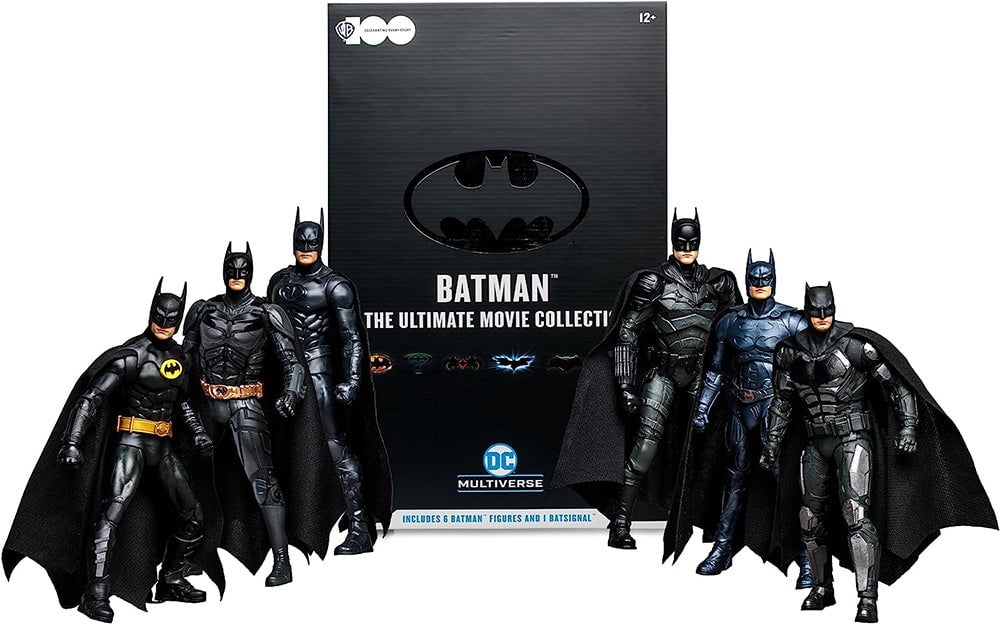
Popverse: McFarlane Toys is still going strong after all these years. What's the secret to doing business the Todd McFarlane way?
Todd McFarlane: I don't know if there's any secret, but for me, the formula that I've tried to use is to give people as high quality as you can and deliver it at the lowest prices possible. If you can build a Cadillac and sell it at Ford Motor prices, you're going to sell a lot of cars. I think the public understands when they're getting value for their dollar. You have to deliver the value and the quality to the consumer, and they'll come back.
With McFarlane toys you work with a lot of licensed properties, like The Simpsons and your old friends at DC. What are some of the challenges of working with licensed properties? Do you ever get any weird requests or notes?
I would argue, in its simplest form, the biggest difficulty is just getting approvals on time, because everybody is on a schedule, and the consumer expects the product to be delivered when everybody's made the promise. There are a lot of things along the way that can change that approval. During the pandemic, there was this term that everybody has now heard plenty of times called the supply chain. If any of the pieces along the way get backed up, then it sort of slows up everything else on it.
But overall, minus those, I'd say that the most interesting changes and requests usually come from the celebrities themselves. Sometimes we do products that are based on real people, and sometimes those people have an input into their own toy. It's kind of interesting sometimes what they want in their own toy, or what their representatives want in their own toy. Literally, we do plastic surgery with our plastic figures sometimes.
It shouldn't surprise you that some of the females go, 'Can you make me a little bit skinnier?' and whatever else. And the dudes are like, 'Can you give me more muscles?' Sometimes it's fun things like that. I remember years ago, Sharon Osborne asking if we could take the love handles off Ozzy. It's like, 'Yeah, sure give him a six pack!' If you want us to make him a Greek god, and that'll get approval, we'll make him a Greek god.
Recently, we had to get approval on Black Adam, and Dwayne Johnson's only comment was, which I think he was right, was, 'Can you make me more ripped?' It actually seems like a silly one, but it actually was right, because I think we all in our mind have a romantic version of many people, and the costume itself wasn't showing off his muscles. We were super accurate to the costume, it's just that the costume wasn't showing it off, so he just wanted us to show it off a bit more. We took a little bit of artistic license to do it. I think it was the right move.
Let me tell you that even if I disagree, the client is always right. I'm looking for an approval. Hey, if you want me to give you two heads, I'll give you two heads. Whatever you need for me to get a sign off.
How has the toy market changed since you launched McFarlane Toys, and how have you adapted to that?
I would say, and hopefully this doesn't come across as egotistical, the biggest change is the introduction of our company way back when. The action figure industry was basically sort of generic toys being sold to moms and seven-year-olds. There wasn't really a wide range of brands, licenses, and intellectual properties, and the quality of the product was, to me as an artist, way below what it should have been, which is essentially why I got into the business.
I asked a simple question: 'Why can't these things look cooler?' 'Why can't they be better?' We came on board in 1994 and it was a bit of a lightning bolt to people. It's like, 'Oooh my gosh, you can make toys a little bit more mature, with more detail, more paint' and do a lot of things that the public companies, the Fortune 500 companies aren't doing, and that was because they were selling to moms and seven-year-olds. And now it started to shift, and I was aiming at people 14 and older.
Since that time, our company has gotten a lot of attention because we were a lone wolf. We were sort of the pioneer. Now, there are arguably dozens of companies that have taken from the playbook of McFarlane Toys, and they do really good, outstanding work and figures. Now there's a lot of stiff competition, and everybody has to basically do a great job, because our consumers are older. They're usually buying it for themselves, and they're not shy. They'll get on the internet and tell you when you've messed up, so you’ve got to be on your toes at all times. You don't get to take a breath.
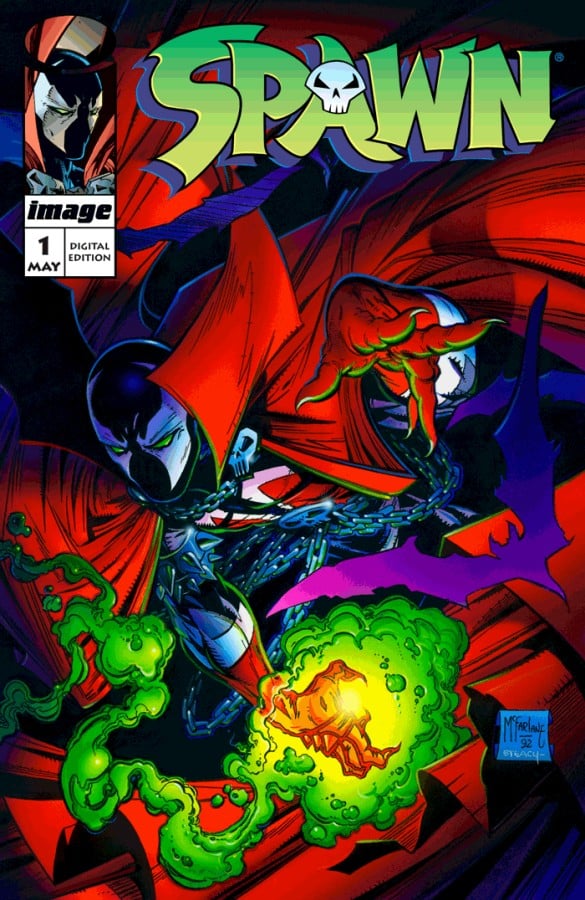
Same question, but this time for the comics industry. How has Image Comics adapted to the changing marketplace?
When we started in 1992, we were going up against the giants. To some extent, my whole life, all I do is go against giants in the industries that I'm in. What I look for when you're going up against a giant, never try to kill the giant. You can't do it because they're too big and they've got too much manpower and money behind them. What I look for is where are they leaving gaps, and then I try to fill the gap. So, on the toy side, like I said, they weren't making toys for people who were 14 and older. Boom, there was an opening.
On the comic book front, we were willing to spend more money on our product to do things like use sort of magazine-quality paper instead of newsprints, to use computer coloring instead of the old-fashioned way of doing it. And we acknowledged that we were selling to a little bit of an older audience. We could get a little more eclectic, a little more mature with our stories, and then as time has gone by, we're now completely eclectic. We're not having to survive on superhero comic books from top to bottom like Marvel and DC.
One of our books that you may have heard of, The Walking Dead, it's black and white, and it's not a superhero book, and it crushed. It worked on every level. That book wouldn't have had a voice at the bigger companies that have a routine of what they think their book should be.
Just so we're clear, and I think people at times don't quite understand this, Image Comics doesn't own anything. That's the difference. When we started the company with the seven of us at the beginning, we gave ourselves the best possible deal creatively we could to us, the original founders, and then we turned to the public, and we said, you can have this exact same contract. The people who come in have the same contract I did.
You own 100% of it, and you get to basically make all creative decisions. What Image Comics is there for, is to help facilitate the stuff that most creative people don't want to deal with, accounting, shipping, printing, solicitation, some of the boring stuff, because people just want to create. We'll take care of logistics, and you go and do it. You own your ideas, lock, stock, and barrel. You can make whatever decisions you want, good, bad, or indifferent. And there have been plenty of all the above over the 30 years we've been publishing.
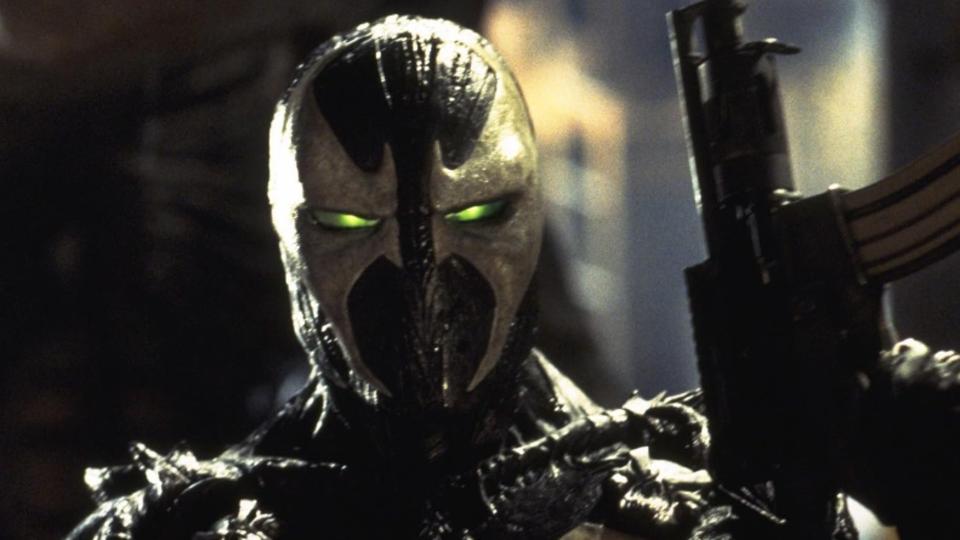
Did you learn any lessons from the 1997 Spawn film, and how are you using those lessons for the upcoming movie?
The biggest piece of information was that after the movie came out, it opened up to about $20 million, which today would be about a $45 million opening. They came to me, and they said that 76% of the people who went were over the age of 14. That told me that even if we could get another movie out three years later, which we didn't, the vast majority of people would be 17 or older, meaning they could go to an R-rated movie.
It hasn't been three years. It's been about 30 years now. So, even if you were a zygote, you could go to an R-rated movie today. I know my audience. My audience isn't young kids. My audience has grown up with the brand and with the character. This movie, when we get it done, has to be an R-rated movie that basically is true to what the character is all about.
What movies, television shows, and comics inspired you when you created Spawn?
You're making me go way back. I created him when I was about 16, and I was just starting to discover comic books. I don't know that there was any one comic book. I think Batman's cool because he's sort of dark. I tend to lean in that direction of dark. The movies I watch are usually pretty somber R-rated dramas, a majority of them based on real-life stories. I was taught to stick to what you know. Stay in your lane.
One of the things I knew at that point is I had just fallen deeply in love with a young lady that I didn't know at the time would turn out to be my wife, and we're still married almost 50 years later. I thought that the story that I wrote, even at 16, because I did a 40-page comic book was based on the premise that - I don't care what and who you are and what your religious background is or what your beliefs are. I think if the person that you care about the most, if you happen to have walked out of the door and you were in a fight, the last thing you said to them was, 'Screw you.' And then on the way to work, you got hit by a bus. I think all of us would trade a moment to be able to go back and say, 'I'm sorry. I love you.'
I don't want my last words on Earth to be, 'Screw you,' to the person you care about the most. It sort of was based on that premise. I think we all would take the deal with the devil in the right circumstances. And then the problem is, if you take it, what are the consequences? And now we're 350 issues into the consequences.
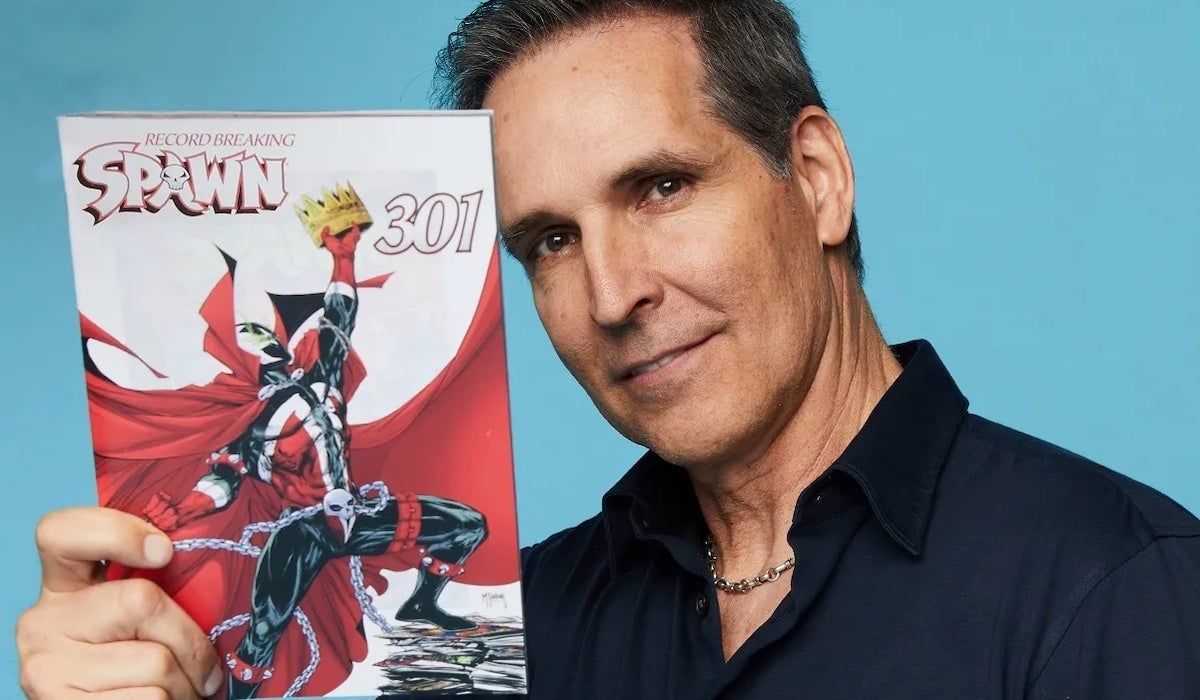
Hypothetical scenario, you're trapped on a desert island, but through a bit of cosmic luck, you're able to pick one comic book, one television show, one novel, and one movie. What do you pick?
The comic book would be the Tomb of Dracula series that ran about 72 issues. I just thought it was a phenomenal run. For the movie, it might be a film called The Insider with Russell Crowe. It's about a whistleblower in the tobacco industry based on a true story, sort of the downfall of Mike Wallace on 60 Minutes.
Every now and then, there are these movies about these people, and they're based on real life, that are willing to give and throw away everything, including their jobs, including their families, including their friends, simply to do the right thing. I think these people are unicorns, and as much as I'd like to think that I would be as gracious as they are, I don't think I'd get there. They know that if they don't do the right thing, that they will never, ever sleep soundly, ever again for the rest of their life. They have to do it, even if it cost them everything that they hold near and dear, they have to have their conscience still intact.
They can't sell that out. Politicians are far from unicorns. They fucking sell themselves out for $1,000, so these are the people that are the opposite. You can't buy them at any cost. That movie just sort of reminds me, and this person in this movie was one of them. The book would probably be the Baseball Encyclopedia that has the stats of every single player that has ever played in Major League Baseball. I'm not big on needing to read 400 pages about one person. I just want a little bit of information about 1000 people. I like to be a Jack of all trades, master of none when it comes to my book, book reading. For television, maybe something like The Sopranos.
Want to know what's coming up next in pop culture? Check out Popverse's guides to:
Follow Popverse for upcoming event coverage and news
Find out how we conduct our review by reading our review policy
Let Popverse be your tour guide through the wilderness of pop culture
Sign in and let us help you find your new favorite thing.







Comments
Want to join the discussion? Please activate your account first.
Visit Reedpop ID if you need to resend the confirmation email.